
5 Habits That May Be Making Your Sinus Symptoms Worse
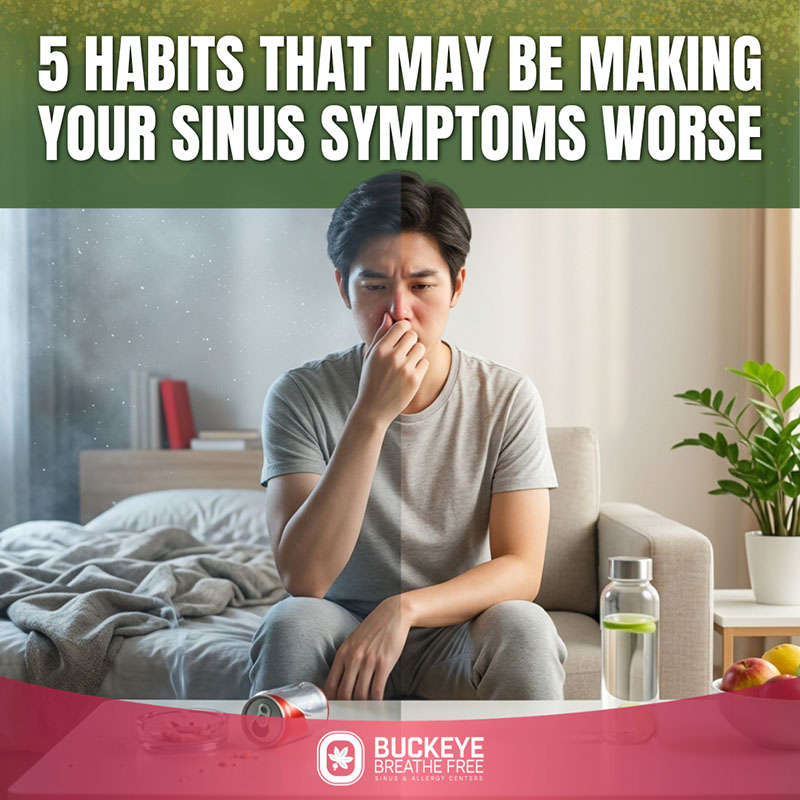
Common sinus issues such as nasal congestion, breathing difficulties, postnasal drip, sinus pressure, and headaches are rarely life-threatening in most cases. Even so, persistent or chronic sinus issues can be frustrating, especially if they start affecting day-to-day life, productivity, sleep, and comfort.
An ENT doctor in Akron, OH, can help assess your symptoms and discuss potential factors that may be worsening your sinus symptoms.
5 Ways You May Be Worsening Your Sinus Symptoms
Here are five seemingly harmless everyday habits that may actually be worsening your sinus problems:
#1: You’re dehydrated
During normal sinus function, the sinuses (which are hollow, air-filled spaces located behind the nose, cheeks, and forehead) naturally produce mucus to humidify the air we breathe and trap and remove irritants in the sinus passages.
When we are dehydrated, the sinuses may produce thick and sticky mucus, which becomes less efficient in doing its core functions. Thick and sticky mucus may be more difficult to clear, contributing to mucus buildup, nasal congestion, and sinus pressure in some patients.
#2: Your air is too dry
Dry air conditions, which are common during the cooler Ohio months, as well as in air-conditioned indoor spaces, may contribute to ongoing or worsening dryness and irritation of the tissues lining the sinuses. This may increase sinus pain and discomfort in some patients.
Additionally, prolonged exposure to extremely dry air conditions can cause the sinuses to produce thick and sticky mucus as well, which may contribute to trapped mucus, breathing difficulties, and a feeling of tightness in the sinus cavities.
#3: You’re ignoring potential allergens and irritants
Some people with allergies may notice that their symptoms sometimes overlap with symptoms of an ongoing case of sinusitis.
If you have a habit of ignoring potential allergens and irritants such as pollen, dust mites, mold spores, pet dander, smoke, smog, and strong odors and scents, you may be unintentionally making your sinus symptoms worse.
#4: You’re overusing nasal decongestant sprays
Nasal decongestant sprays are a common and often sought-after medication for dealing with chronic nasal congestion, which is a common symptom of sinusitis. These sprays work by narrowing the blood vessels lining the nasal passages, which may offer some temporary relief from breathing difficulties.
However, overusing them may lead to increased nasal congestion, which is known as rebound congestion.
#5: You’re not sleeping properly
Poor and inadequate sleep may affect overall health and immune function, and may even potentially make sinus symptoms worse and more difficult to manage.
Moreover, sleeping in the wrong position, with your head completely flat on the bed, may cause mucus to pool in the sinuses. In some cases, this may increase nasal congestion, breathing difficulties, and overall sinus discomfort.
5 Ways to Counter Sinus-Worsening Habits
Here are five ways you can combat habits that may potentially be worsening your sinus symptoms:
✅ Keep yourself well-hydrated
If you’re already dealing with frustrating sinus issues, remember to keep yourself hydrated by drinking plenty of water throughout the day, especially on hot and dry days. This may help support normal mucus consistency and overall sinus function.
Some patients may also consider limiting their intake of dehydrating beverages, such as caffeine and alcohol, to minimize further sinus dryness and irritation.
✅ Humidify your indoor air
When indoor air feels too dry, run an indoor humidifier to add moisture back into the air, especially in your bedroom during sleep. This may help mitigate dryness not only in the air but also in your sinuses. Of course, don’t forget to regularly clean your humidifier unit to prevent mold growth.
Moreover, keep an eye on indoor humidity levels. Aim for a level between 30% to 50% to prevent both extremes: dry, irritating air and mold growth in too humid environments.
✅ Stay on top of your allergens and irritants
While you can’t completely avoid allergens and irritants that linger in the air, there are some measures you can take to manage your exposure to them:
- Monitor daily allergens and pollen forecasts to start your day
- When going out during peak allergy season, wear a protective mask to minimize your allergen exposure
- Keep your home and workspace clean and free from allergens and irritants
- Keep windows closed, especially on high-allergen and windy days
- Practice frequent and proper hand washing habits
- Avoid smoking, especially while you’re dealing with ongoing sinus problems
- Consider refraining from using strong perfumes and colognes while dealing with sinus issues
✅ Use nasal decongestant sprays only as directed
Generally, many topical decongestant sprays should not be used for more than three consecutive days to prevent rebound congestion. Remember to use nasal decongestant sprays as directed on the label or by a healthcare provider.
Additionally, some patients may find it helpful to irrigate their sinuses with a neti pot. Remember to follow device instructions carefully and to only use sterile, distilled, or previously boiled water to minimize the risk of infection due to improper device use.
✅ Get adequate and proper sleep
Lastly, make sure you’re getting adequate sleep every night. This may help your body recover and fight off infections. The number of hours you should sleep will depend on your age and individual health needs. But generally, it’s recommended for adults to get about seven to nine hours of sleep every night.
When you’re already dealing with sinus issues, try sleeping with your head slightly elevated. This may support efficient mucus flow and drainage, and increase comfort during sleep.
Frequently Asked Questions About Sinus Care in Akron, OH
What is sinusitis?
Sinusitis is characterized by the irritation, swelling, and inflammation of the tissues lining the sinuses, which are hollow, air-filled spaces behind the nose, cheeks, and forehead. Sometimes, the sinuses become swollen and irritated, which may trap mucus and cause mucus buildup, nasal congestion, and sinus pressure.
What does an ENT in Akron, OH, do?
An ENT, formally referred to as an otolaryngologist, diagnoses and treats issues and conditions affecting the ears, nose, throat, neck, and related facial structures.
Depending on their clinical focus and subspecialty, they may offer focused care on allergies, sinusitis, ear infections, hearing disorders, throat concerns, balance issues (such as dizziness and vertigo), and sleep-related breathing problems (such as severe snoring and sleep apnea).
ENT services available vary per clinic and provider.
When should I see a sinus specialist in Akron, OH?
Some sinus issues may resolve with adequate rest, proper hydration, home remedies, and over-the-counter medications. However, consider seeing a sinus specialist for worsening or persistent symptoms that last longer than 10 days.
Moreover, seek prompt medical help for severe symptoms, such as high fever, stiff neck, facial swelling, confusion, and vision changes.
Conclusion: Address Worsening Sinus Symptoms With Buckeye Breathe Free
Buckeye Breathe Free offers ENT care services in Akron, Fairlawn, Cuyahoga Falls, and the nearby Summit County communities. Schedule an appointment to learn more about available ENT services near you.