

Ringing in the Ears: When to See an ENT
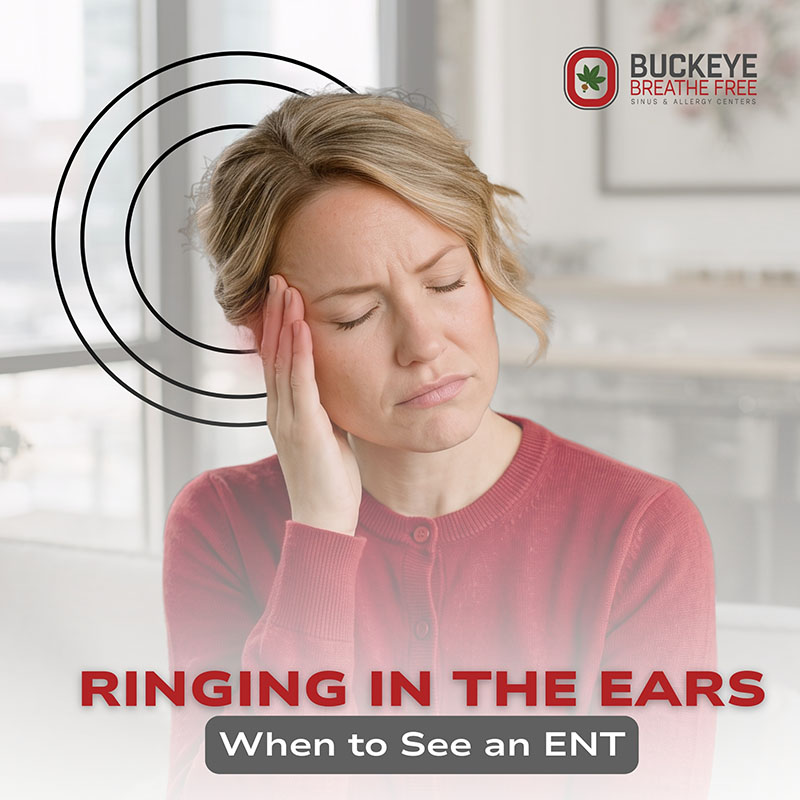
Almost everyone has experienced it at least once—a high-pitched ringing after a loud concert, a sporting event, or even a fireworks show. In many cases, the sound fades after a few hours. But what if it doesn’t? What if the ringing returns regularly, or never goes away at all?
Many people assume there’s nothing they can do about ringing in the ears, so they simply learn to live with it. At Buckeye Breathe Free Sinus & Allergy Centers, we want patients to know that persistent ringing, known as tinnitus, isn’t a condition itself. It’s a symptom that may point to an underlying issue affecting the hearing system or another part of the ear, nose, and throat.
Understanding when tinnitus deserves medical attention can help you find answers sooner.
What Is Tinnitus?
Tinnitus is the perception of sound when no external sound is present. Although ringing is the most common description, people also report hearing:
- Buzzing
- Humming
- Hissing
- Clicking
- Roaring
- Whistling
The sound may affect one ear or both ears. It may come and go, or it may be present throughout the day.
For some people, tinnitus is little more than an occasional annoyance. For others, it can interfere with concentration, sleep, work, and overall quality of life.
Why Does Tinnitus Happen?
Tinnitus can develop for many different reasons.
Hearing loss is commonly associated with tinnitus, although the mechanisms that contribute to tinnitus are complex and can vary among individuals.
Other possible causes include:
- Exposure to loud noise
- Earwax buildup
- Ear infections
- Certain medications
- Problems affecting the middle or inner ear
- Disorders involving the jaw joint (TMJ)
- Less commonly, underlying medical conditions that affect hearing or circulation
Because several different conditions may contribute to tinnitus, identifying the possible causes or contributing factors is an important part of evaluation.
Everyday Activities Can Increase Noise Exposure
Noise exposure can happen during many everyday activities, whether at work, at home, or during recreation.
Concerts, sporting events, power tools, landscaping equipment, motorcycles, recreational vehicles, and other loud environments can expose people to potentially harmful noise levels.
Repeated exposure to loud sounds may contribute to hearing changes and increase the risk of tinnitus over time. Using appropriate hearing protection during noisy activities can help reduce the risk of noise-induced hearing damage.
Tinnitus Doesn’t Always Mean You’re Losing Your Hearing
One of the biggest misconceptions about tinnitus is that everyone who experiences ringing has significant hearing loss.
While hearing changes are common among people with tinnitus, they’re not the only explanation.
Some patients have temporary tinnitus after a loud event. Others may experience tinnitus alongside ear infections, middle-ear or Eustachian tube problems, or other conditions that warrant evaluation.
That’s why it’s important not to assume factors that may be contributing to your symptoms without an evaluation.
How ENT Specialists Evaluate Ringing in the Ears
An ENT evaluation focuses on understanding why tinnitus developed rather than simply confirming that it’s present.
Your provider will ask questions such as:
- When did the ringing begin?
- Is it constant or intermittent?
- Does it affect one ear or both?
- Have you noticed hearing changes?
- Have you recently been exposed to loud noise?
- Does the sound change with movement or certain activities?
Depending on your symptoms, your evaluation may include a hearing test, an examination of the ears, or additional testing to determine whether hearing loss, ear disease, or another condition is contributing to the problem.
The goal is to identify any contributing factors and determine the most appropriate next steps.
How Do I Know It’s Time to Stop Waiting and Get Checked?
Occasional ringing after a loud event often improves within a day. However, you should consider scheduling an ENT evaluation in Akron if:
- Ringing lasts longer than a day or two.
- Tinnitus keeps returning.
- The sound affects only one ear.
- You notice hearing loss or dizziness.
- Ringing interferes with sleep or concentration.
- Symptoms are becoming more noticeable over time.
Even if tinnitus can’t always be eliminated completely, identifying possible causes or contributing factors can help guide appropriate management
Don’t Ignore Persistent Ringing
It’s easy to dismiss ringing in the ears as something that simply comes with age or noise exposure. Persistent or recurring tinnitus may warrant evaluation, particularly when it occurs with hearing changes, dizziness, or other ear-related symptoms. Understanding factors that may be contributing to your symptoms is the first step toward protecting your hearing and improving your quality of life.
At Buckeye Breathe Free Sinus & Allergy Centers, we help patients throughout Akron and surrounding Northeast Ohio communities evaluate tinnitus, hearing concerns, and other ear, nose, and throat conditions through personalized care. If ringing in your ears has become a regular part of your day, call us to schedule a consultation to better understand factors that may be contributing to your symptoms.