
Why Summer Humidity Can Make Sinus Congestion Feel Worse in Northeast Ohio
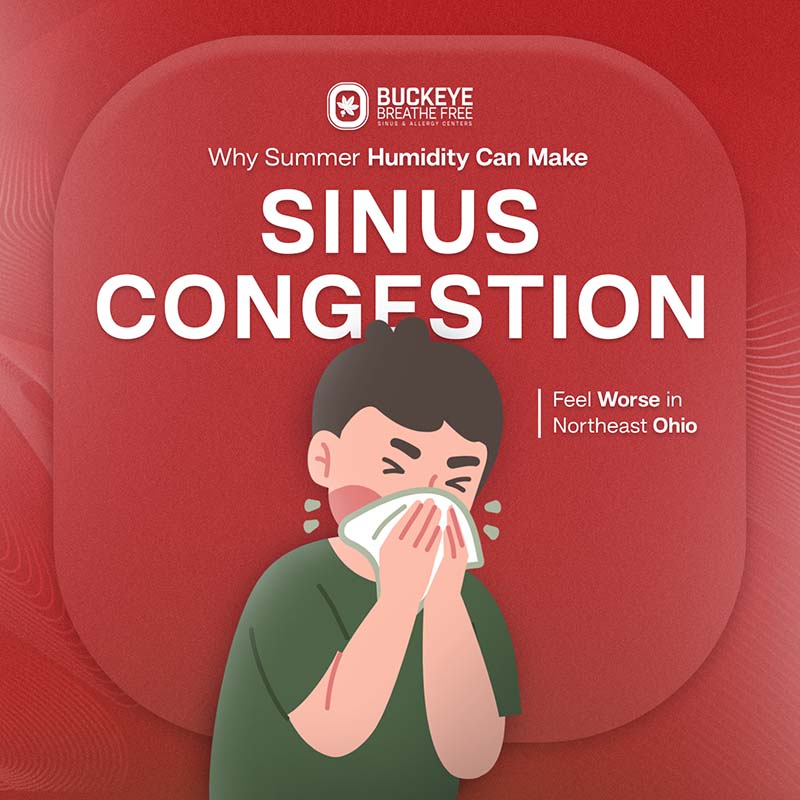
Imagine waking up one summer day. The air feels heavy, muggy, and all too humid. Not only is this situation uncomfortable, but you’re also noticing increased sinus congestion and even more sinus issues.
Summers in Northeast Ohio are usually hot and humid. Not only do summers feel uncomfortable and heavy, but they can also aggravate sinus issues in many sensitive individuals.
Let’s dive deep into why summer humidity in Akron, OH, and the rest of Northeast Ohio can make sinus issues worse and what you can do to combat it.
How Northeast Ohio Summer Humidity Can Impact the Sinuses
Here’s how the hot and humid summers of Northeast Ohio impact sinus health and potentially make nasal congestion worse:
⭕ High humidity impairs cilia function
For some people, hot, humid conditions may affect how mucus moves through the nasal passages and may contribute to feelings of congestion.
When cilia function is impaired, the risk for nasal issues, such as nasal congestion, sinus infection, mucus buildup, breathing difficulties, and sinus pressure, may also increase.
Cilia dysfunction may allow mucus to build up, causing postnasal drip (mucus dripping down the back of the throat) and clogged nasal and sinus passages.
⭕ High humidity impairs respiratory function
High humidity levels can make it difficult to breathe, which can worsen respiratory issues. High humidity levels can be bad for the lungs because of the heavy and sticky air. High humidity can make breathing feel more uncomfortable for some people and may contribute to a sensation of congestion, particularly in individuals with underlying respiratory conditions. For some individuals, humid conditions may contribute to congestion or changes in mucus consistency, which can make sinus symptoms feel worse.
⭕ High humidity increases allergen levels
The summer season is grass allergy season in Ohio. The biggest culprits during this time of year include ryegrass, Kentucky bluegrass, orchard grass, and timothy grass.
Moreover, high humidity levels in Ohio could also encourage increased growth of mold and dust mites, which can trigger allergy symptoms, including nasal congestion, in sensitive individuals.
Taking Care of Your Sinuses During Humid Summers
Here are some tips you can follow to take better care of your sinuses during Ohio’s humid summers:
✅ Run an indoor dehumidifier to combat extreme humidity
Ohio summers can feel heavy, sticky, and muggy. Combat extreme humidity levels and their impact on the sinuses by running an indoor dehumidifier. This can reduce excess indoor moisture and may make the indoor environment more comfortable for some people with sinus or allergy symptoms.
✅ Monitor allergen levels in Ohio
Make it a habit to start your summer days by checking and monitoring the day’s allergen levels. This allows you to plan your day accordingly. If allergen levels are extremely high, it would be better to stay at home and keep windows closed to avoid exposure. If you have to head out, don’t forget to wear a protective mask to protect yourself from excess allergen exposure, especially on high-allergen and windy days.
✅ Use saline nasal sprays
Saline nasal sprays can break down mucus buildup and clear out allergens and irritants in the nasal passages, which can help ease nasal congestion.
✅ Stay hydrated
Proper hydration can efficiently keep sinus health by keeping mucus thin and encouraging proper mucus flow and drainage.
✅ Change out of your outdoor clothes and get in the shower
During peak allergy season, it’s important to change out of your outdoor clothes, get in the shower, and change into fresh clothes to get rid of any allergens that might have stuck on you during your time outdoors.
What About Air Conditioning During the Summer?
Many Akron and Ohio residents combat summer heat by running an air conditioner. While this cools the air and reduces indoor humidity to increase overall sinus comfort, extremely dry air can also exacerbate sinus issues.
Extremely dry air can dry and irritate the nasal and sinus passages, which can increase nasal discomfort, congestion, and breathing problems.
Here’s how you can combat sinus congestion caused by dry AC air:
✅ Run an indoor humidifier to combat extreme dryness
If indoor air feels too dry, run an indoor humidifier to add moisture back into the air. This can help reduce sinus dryness and irritation, decreasing nasal issues and increasing sinus comfort.
✅ Clean your AC and change your HVAC filter regularly
Keep your home’s indoor air healthy by routinely cleaning your AC unit and changing HVAC system filters. This prevents allergens from entering your space and keeps sinuses healthy and comfortable.
Commonly Asked Questions About Humidity and Sinus Health in Akron, OH
What is the ideal humidity level for sinus health?
Many experts recommend maintaining indoor humidity between about 40% to 60% for general comfort and to help reduce excessively dry or damp indoor air. Combat extreme humidity by running an indoor dehumidifier or extreme dryness with an indoor humidifier.
Does high humidity make sinus congestion worse?
Yes, high humidity can worsen sinus congestion due to damp and heavy air that makes it harder to breathe, as well as increased allergen levels that can trigger allergy and sinus flare-ups.
Does low humidity make sinus congestion worse?
Yes, low humidity can worsen sinus congestion because dry air can irritate the tissues and membranes lining the nose and sinuses. This can cause irritation and trigger congestion, nosebleeds, and sinus pressure.
When is it time to seek help for sinus issues?
Consider seeing a sinus specialist if sinus issues persist longer than 10 days, worsen, or recur frequently throughout the year.
Moreover, seek prompt medical help for severe symptoms, such as facial swelling, high fever, vision changes, or confusion.
Conclusion: Enjoy Ohio Summers While Taking Care of Your Sinuses With Buckeye Breathe Free
Buckeye Breathe Free provides ear, nose, and throat care services in Akron, Cuyahoga Falls, Fairlawn, and the surrounding Northeast Ohio. If your sinus issues have become chronic, severe, or have started to impact daily life, productivity, sleep, and comfort, schedule a consultation with our team and learn more about your sinus symptoms and discuss management options that may be appropriate for you.