

Why Am I Always Congested?
Understanding Chronic Nasal Congestion
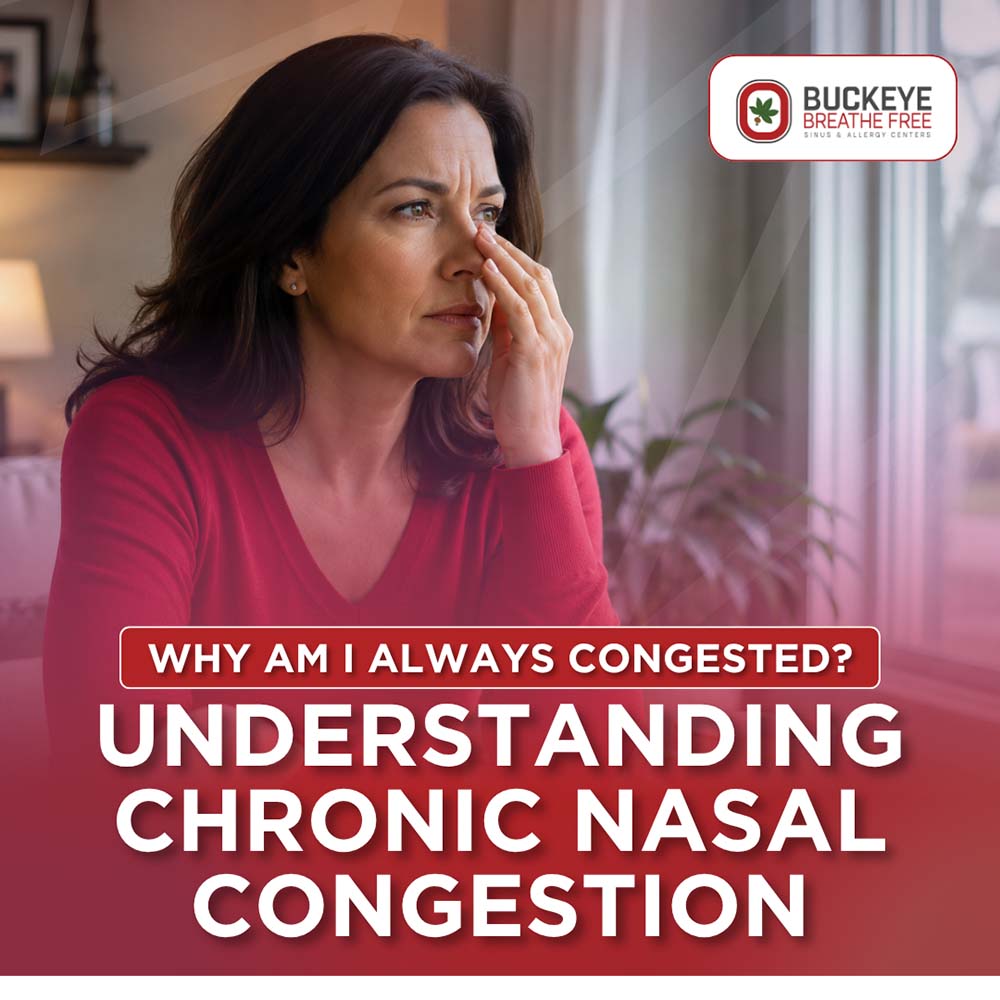
Imagine waking up one day with a stuffy nose. You can’t breathe properly through your nose. There seems to be some nasal discharge that could become annoying fast. And you’re starting to notice a feeling of tightness, pressure, or achiness in your head and face, particularly around the nose, eyes, cheeks, and forehead.
While nasal congestion begins in the nose and sinuses, it can sometimes contribute to symptoms such as facial pressure, headaches, and disrupted sleep.
An ENT doctor in Akron, OH, can help evaluate your symptoms and guide you toward appropriate treatment plans and management strategies to address ongoing sinus issues.
What Is Nasal Congestion?
Nasal congestion occurs when the tissues and membranes lining the sinuses and the inside of the nose become irritated, swollen, and inflamed. This inflammation traps mucus inside the sinuses, which can make it hard for the mucus to flow and drain efficiently.
Typically, nasal congestion can clear after a few days, but it can become chronic or persist for a week or more, which may be a sign of an infection. Persistent nasal congestion may be associated with sinusitis, allergies, structural concerns, or other conditions and may warrant evaluation by a healthcare provider.
How Does Chronic Nasal Congestion Affect Me?
A stuffy or congested nose can:
- Make it difficult to breathe through the nose
- Cause a runny nose, which is mucus flowing through the nose
- Promote mouth breathing, which causes individuals to breathe through the mouth because they can’t breathe through the nose
Moreover, persistent or chronic nasal congestion can cause additional symptoms such as sneezing, coughing, headaches, and sinus and facial pressure.
What Are the Common Causes of Chronic Nasal Congestion?
Many things can trigger nasal congestion. Your nose, when you breathe in air, filters out particles that may trigger irritation. However, it doesn’t always catch all particles and irritants. When we inhale these particles, the tissues lining the nose can become irritated and swollen. When nasal tissues become inflamed, the body may produce more mucus, which can contribute to congestion and impaired sinus drainage. The sinus inflammation and mucus could make the congestion or stuffiness worse.
Let’s go over the common causes of nasal congestion:
✅ Allergies and environmental triggers
Allergies (allergic rhinitis) are one of the most common causes of nasal congestion. It is the body’s immune response to substances called allergens. Common allergens include pollen, dust mites, mold, and pet dander.
In addition to nasal congestion, other common allergy symptoms include frequent sneezing, itchy and watery eyes, itching, and skin hives.
✅ Non-allergic rhinitis
Non-allergic rhinitis is a form of rhinitis that can also cause nasal congestion without it resulting from an allergic reaction or immune response. This type of nasal inflammation can occur due to a viral infection or exposure to certain environmental triggers, such as air pollution, smoke, dry indoor air, chemical fumes, strong scents or odors, and weather fluctuations.
✅ Sinusitis
Sinusitis (acute or chronic) occurs when the tissues and membranes lining the nose and sinuses become irritated, swollen, and inflamed. When the sinus cavities become inflamed, mucus can get trapped, which disrupts normal mucus flow and drainage.
This can result in symptoms such as nasal congestion, postnasal drip, thick nasal discharge, headaches, facial pressure, and a reduced sense of smell and/or taste.
✅ Structural issues and abnormalities in the nose and sinuses
Structural issues and abnormalities in the nose and sinuses can contribute to chronic nasal congestion. Common structural issues that may cause chronic nasal congestion include:
- Nasal polyps: These are soft, noncancerous growths that could form along the nasal and sinus linings, which can restrict airflow.
- Deviated septum: A deviated septum is a structural anomaly in which the nasal septum is off-center and misaligned, which can limit airflow and cause chronic sinus issues.
- Enlarged turbinates: While turbinates help cleanse and humidify the air we breathe, they can become swollen and enlarged, which can obstruct airflow and breathing.
✅ Hormonal fluctuations
Hormonal changes, such as during pregnancy, can significantly affect the nasal membranes or cause swelling in the nasal tissues, which can obstruct airflow.
✅ Certain medications
Certain medications, such as those taken for pain or high blood pressure, can cause swelling in the nasal tissues and trigger nasal congestion.
Additionally, overusing nasal decongestant sprays can lead to a type of nasal obstruction called rebound congestion, which can irritate the nasal passages.
✅ Other underlying medical conditions
In some cases, some other underlying medical conditions, such as asthma and cystic fibrosis, can cause chronic nasal congestion. In these cases, addressing the underlying medical condition is crucial in addressing the restricted airflow.
How Is Nasal Congestion Diagnosed?
Accurate diagnosis is crucial in guiding appropriate treatment and symptom management planning.
An ENT care provider will perform a physical assessment of your ears, nose, and throat, in addition to evaluating your symptoms and their severity. They may also conduct additional tests, such as:
- Nasal endoscopy
- Allergy testing
- Imaging tests
- Throat culture
How Is Nasal Congestion Treated and Managed?
Nasal congestion treatment and symptom management strategies will vary depending on the severity of the congestion, clinical findings, underlying causes, and other individual health factors. Treatment options may include:
- Medications, such as decongestants, antihistamines, saline nasal sprays and rinses, nasal corticosteroid sprays, and pain relievers
- Immunotherapy (allergen shots or allergy drops)
- Balloon sinuplasty
- Sinus surgery
When Should I See a Sinus Specialist in Akron, OH, for Chronic Nasal Congestion?
Short-term nasal congestion often improves on its own, but persistent or worsening symptoms may warrant evaluation. Consider seeing a sinus specialist if:
- Your nasal congestion persists for more than 10 days
- You have a fever
- You have thick green or yellow nasal discharge, or mucus that has blood in it
Conclusion: Learn More About Nasal Congestion and Management Strategies With Buckeye Breathe Free
Buckeye Breathe Free provides allergy, sinus, and ENT care services in Akron, Cuyahoga Falls, Fairlawn, Stow, Green, and the surrounding communities. Contact our team or schedule an appointment to learn more about persistent nasal congestion and potential factors that may be contributing to ongoing sinus issues.